

With expertise in AI, Big Data, and IoT, ahedd helps businesses and public organisations innovate, modernise operations, and unlock new value through emerging technologies.
Your One-Stop-Shop for Digital Transformation
ahedd Digital Innovation Hub is powered by National Centre of Scientific Research Demokritos, the largest multidisciplinary Research Centre of Greece.
ahedd lies at the heart of innovation in NCSR Demokritos


ahedd is the coordinator of Smart Attica EDIH
Smart Attica is the European Digital Innovation Hub (EDIH) for Artificial Intelligence in Greece, supporting SMEs and public organisations in accelerating their digital transformation through AI, Big Data, and advanced technologies.
Artificial Intelligence (Al)

High-Performance Computing (HPC)

Cybersecurity


BUSINESS INCUBATION & ACCELERATION
Aiming to support business innovation and economic growth, ahedd in collaboration with Lefkippos Technology Park—home to over 40 start-ups, spin-offs, and R&D departments like Tesla — offers business coaching, fundraising support and networking opportunities with diverse stakeholders for startups.
aboutOur competences
Ahedd
AI
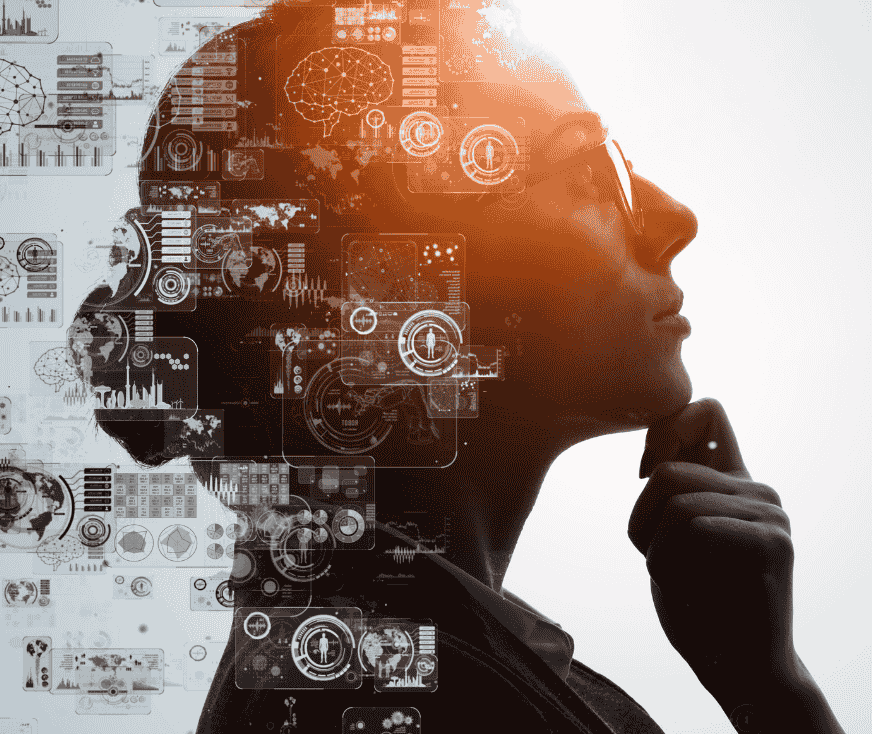
ahedd has high specialisation and significant expertise in technologies like Artificial Intelligence, Big Data management and analytics, Internet-of-Things and their applications across different sectors such as Smart Cities, Healthcare, Education, Environment, Manufacturing, Mobility & Logistics, Business & Commerce.
our-competencesSmart Technologies. Real Impact.
Artificial Intelligence
ahedd delivers advanced Artificial Intelligence solutions across domains such as machine learning and knowledge representation. Expertise includes natural language processing, multilingual summarization, recommendation systems, data extraction, named-entity recognition, web crawling, and intelligent planning—supporting human-robot interaction and enabling smart, adaptive systems tailored to complex, real-world challenges across industries.
Big Data
ahedd offers advanced capabilities in Big Data management, focusing on scalable infrastructures, data integration and homogenisation, real-time stream analysis, multimedia content processing, and data visualisation. Expertise also includes distributed indexing, database federation, and optimising e-infrastructure performance through abstraction and efficient execution.
Internet of Things
ahedd develops and integrates advanced Internet of Things (IoT) technologies, including customized smart sensors, wireless and vehicular networks, and mobile ad hoc systems. Its expertise spans IoT platforms, cyber-physical twins, and smart infrastructure management, offering end-to-end engineering and programming for IoT-driven applications and systems.
faqEverything you need
to know about AI
AI can primarily help us organize things, in tasks such as classification and clustering, where it can learn from examples. It can also identify trends and patterns in the data we provide, estimating what can happen tomorrow, across many domains from the environment, to finance, health and more. It can also mimic the way we create music, we paint or write, based on our input. Last, but not least, it can help us encode our knowledge and reason through it to provide interesting advice and support, or search through huge amounts of information to find what we need. Variations and combinations of the above foundational tasks make AI a horizontal enabler across settings and problems.
There are three main avenues of learning: through explicit statements, through observations and through reinforcement. In the case of explicit statements, we provide the machine with our knowledge about a domain, as a (mathematical-logic-based) set of statements, so that someone else can ask questions about this domain and get (AI-reasoning-based) answers. In the case of observations, the AI systems learn from data we provide, identifying patterns in the data that allow the AI system to mimic our behavior in tasks, such as classification (e.g. book classification) and clustering (e.g. customer segments discovery). In the reinforcement-based learning case, we create a system that tries to learn how to be good in a setting, e.g. a good chess player, by trying things and asking us how we evaluate its approach afterwards. In all the cases, the knowledge or data we provide, plus the learning process (a.k.a. algorithm) we select, define how good our system will become.
AI does nothing on its own, since it is not a person and has no preferences. The true question is whether we, as human societies, we will actively choose to replace or substitute humans in some jobs. In any case, the typical and suggested scenario of using AI is the one that an AI system supports the human worker, to reduce errors, to increase speed, to act as a second opinion and so on. Challenges have appeared, not in a typical repetitive setting, but in setting where creativity products are involved: paintings, photography, music and verses, scripts and so on. There we need -as consumers and creators- to determine what we want and what we do not want, to actively guide AI systems towards these ends, through the (ethical, legal, political and technical) means we have in our hands. No decisions are pre-made: we actively form they AI we want to exist tomorrow.
AI typically mimics humans, having “learnt” through our explicit or implicit contributions (data, knowledge, preferences, etc.). Thus, first and foremost, it is prone to repeating our mistakes. However, especially in the case of AI chat-bots (a.k.a. dialogue systems), the mistakes an AI makes, appear to be in full contradiction with its guise of extreme intelligence. However, one look under the hood shows that AI tends to repeat things it has “seen” (more or less) in the data it was trained upon, but also tries to generalize, by not “expressing” itself based on the exact wording it has seen. This “creativity” is essentially due to a random number generator in AI systems, which allows choosing different words to write a text. This randomness can lead the system to sentences that are indeed problematic. However, even sentences and answers that appear correct may simply be plausible (in terms of grammar, syntax and semantic), but not true when compared to the real world. This lack of world (a.k.a. pragmatic) knowledge and experience is one of the big problems of current AI.
The most sincere answer is: we do not even know exactly how humans think, so how can we answer this? In any case, AI systems are mathematical in their foundations, while humans are not. Thus, even though the outcome of an interaction can be very similar to a human outcome, the underpinning mechanism is completely different. Furthermore, we human have a huge amount of non-verbal, non-explicit knowledge of the world, which we typically not even need to express. All this wealth of experience is difficult to integrate into a machine. On the other hand, in several applications AI can really appear to think like us, because we try a lot to make this happen. Thus, putting an amazing amount of human effort, systems become better in keeping a guise of human-like thinking, which however is nothing but a façade, very convincing but actually hollow.
newsLearn more about ahedd's activities and selected topics on digital innovation by reading our news posts or subscribing to our newsletter!
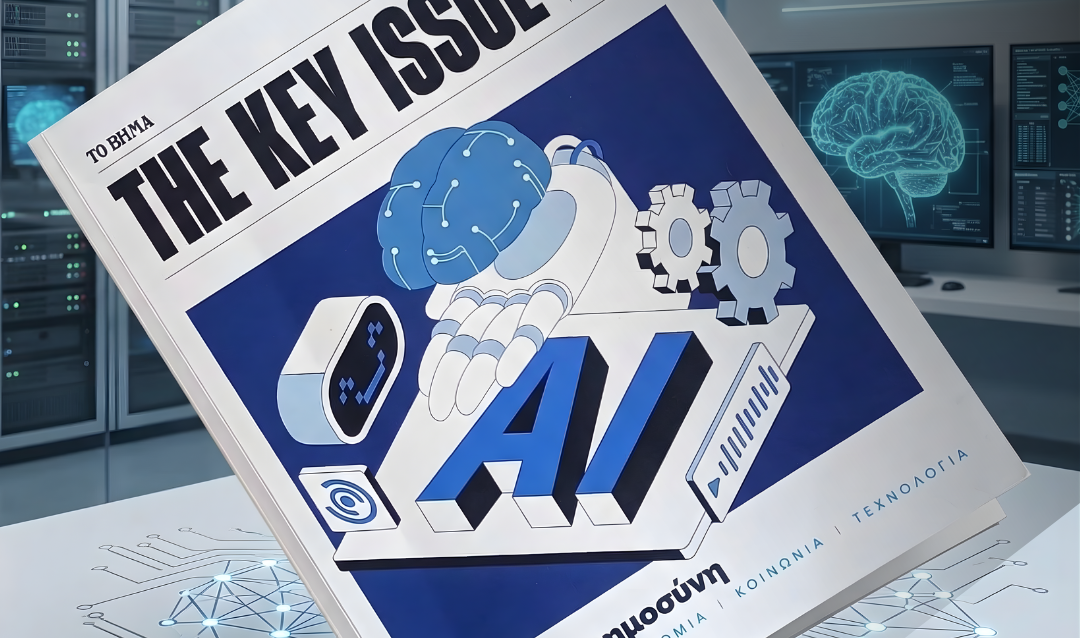
Artificial Intelligence at the Center of Public Dialogue
Artificial Intelligence continues to reshape the way economies functio
get in touchEvery great collaboration begins with a simple conversation.
Let’s connect.
We are always ready to help you and answer your questions
Our Location
Patr. Gregoriou E & 27 Neapoleos Str, 15341 Agia Paraskevi, Greece